Body Skin Care Routines
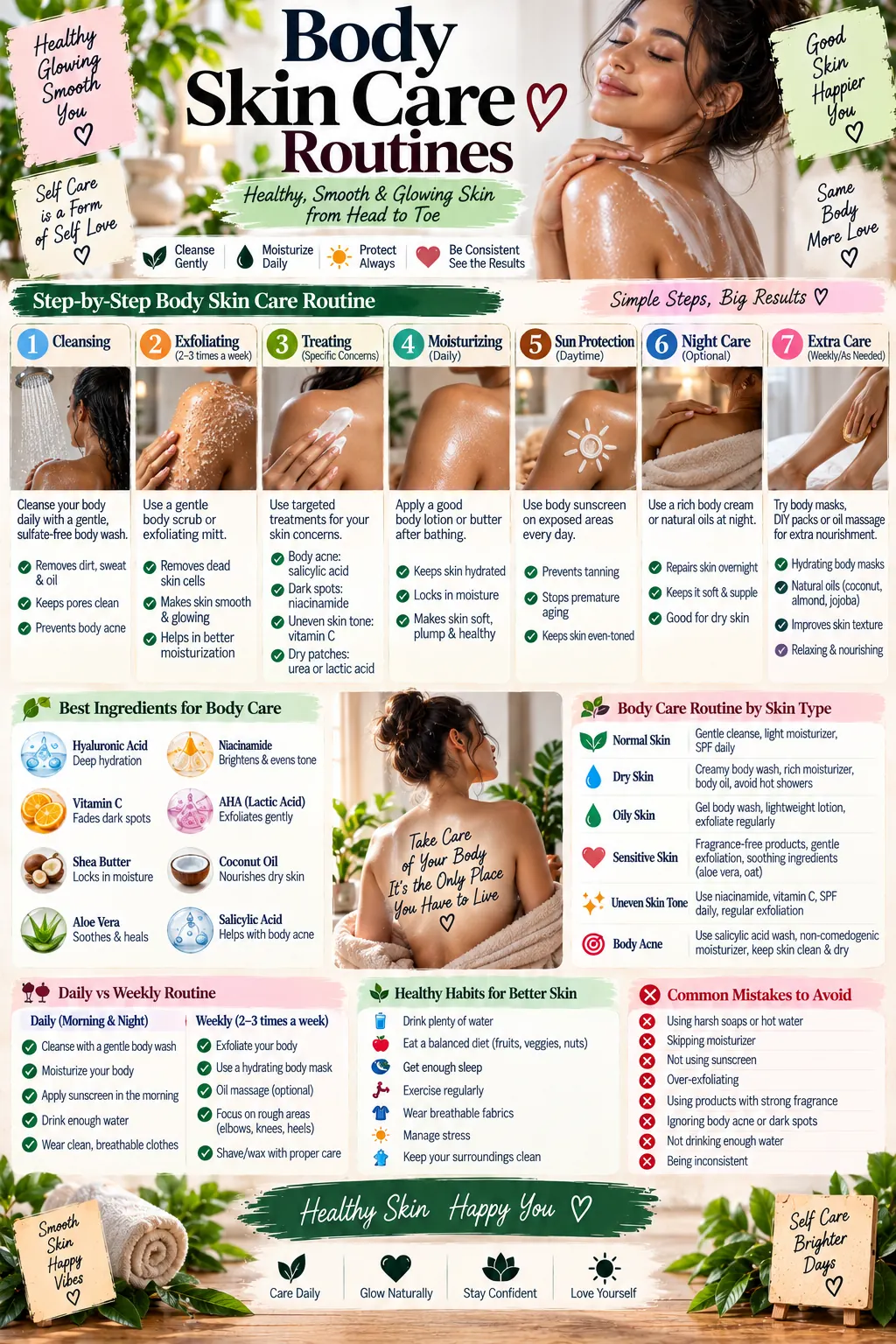
Build a simple body skincare routine with gentle cleansing, moisturizing, sun protection, exfoliation, and practical habits.
The Simple Daily Routine
A practical body routine can be as simple as gentle cleansing, moisturizing after bathing, and sunscreen on exposed skin during the day.
Choose a Gentle Body Wash
Look for a cleanser that leaves skin comfortable rather than tight or squeaky. Fragrance-free options can be useful for sensitive skin.
Exfoliate Carefully
Exfoliation can smooth rough-feeling skin, but more is not always better. Start once or twice a week and reduce frequency if skin becomes irritated.
Target Specific Concerns
Ingredients such as salicylic acid can be useful for body breakouts, while lactic acid or urea can help with rough, dry texture. Patch-test new products.
Moisturize Every Day
Apply lotion or cream to slightly damp skin after bathing. Richer creams and body oils can be especially helpful for dry areas such as elbows, knees, and heels.
Do Not Skip Body Sunscreen
Use broad-spectrum sunscreen on exposed areas such as arms, shoulders, chest, and hands. Reapply when needed during prolonged outdoor exposure.
Routine by Skin Type
Dry skin often prefers richer moisturizers; oily or acne-prone skin may prefer lighter non-comedogenic textures; sensitive skin usually benefits from simpler, fragrance-free formulas.
Common Mistakes
Avoid very hot showers, harsh scrubbing, over-exfoliation, and changing many products at once. Consistency usually matters more than a complicated routine.
Frequently Asked Questions
Is this medical advice?
No. This is general wellness information, not a diagnosis or individualized medical plan.
How quickly will I notice results?
Healthy habits usually work through consistency over time rather than overnight changes.
Do I need to change everything at once?
No. Start with a few realistic habits and build gradually.
How much exercise do I need?
The right amount depends on your health, experience, and goals. Build gradually and include recovery.
What should I eat for better health?
Aim for a varied diet with vegetables, fruit, protein, whole grains or other high-fiber foods, and healthy fats.
How important is sleep?
Sleep is an important part of recovery, energy, mood, and overall wellbeing.
How much water should I drink?
Fluid needs vary. Drink regularly and adjust for heat, activity, diet, and individual needs.
Can I still enjoy treats?
Yes. A balanced lifestyle can include favorite foods in reasonable portions.
What if I miss a workout?
Resume your routine when you can. One missed session does not erase your progress.
How do I stay consistent?
Make habits convenient, track simple behaviors, and choose activities you genuinely enjoy.
Should I take supplements?
Not everyone needs supplements. Discuss supplements with a qualified healthcare professional when appropriate.
When should I seek professional help?
Seek qualified medical or mental-health guidance for persistent, severe, or concerning symptoms.
Can beginners follow these tips?
Yes. Beginners should start gently, learn technique, and increase difficulty gradually.
How do I make healthy habits affordable?
Prioritize simple staples such as oats, beans, eggs, seasonal produce, rice, potatoes, and frozen vegetables.
What matters most?
Consistency, adequate recovery, nutritious food, regular movement, and getting appropriate support when needed.
Final Thoughts
Keep the ideas that fit your life, make them your own, and focus on simple choices you can repeat. A useful routine does not have to be perfect to be worthwhile.