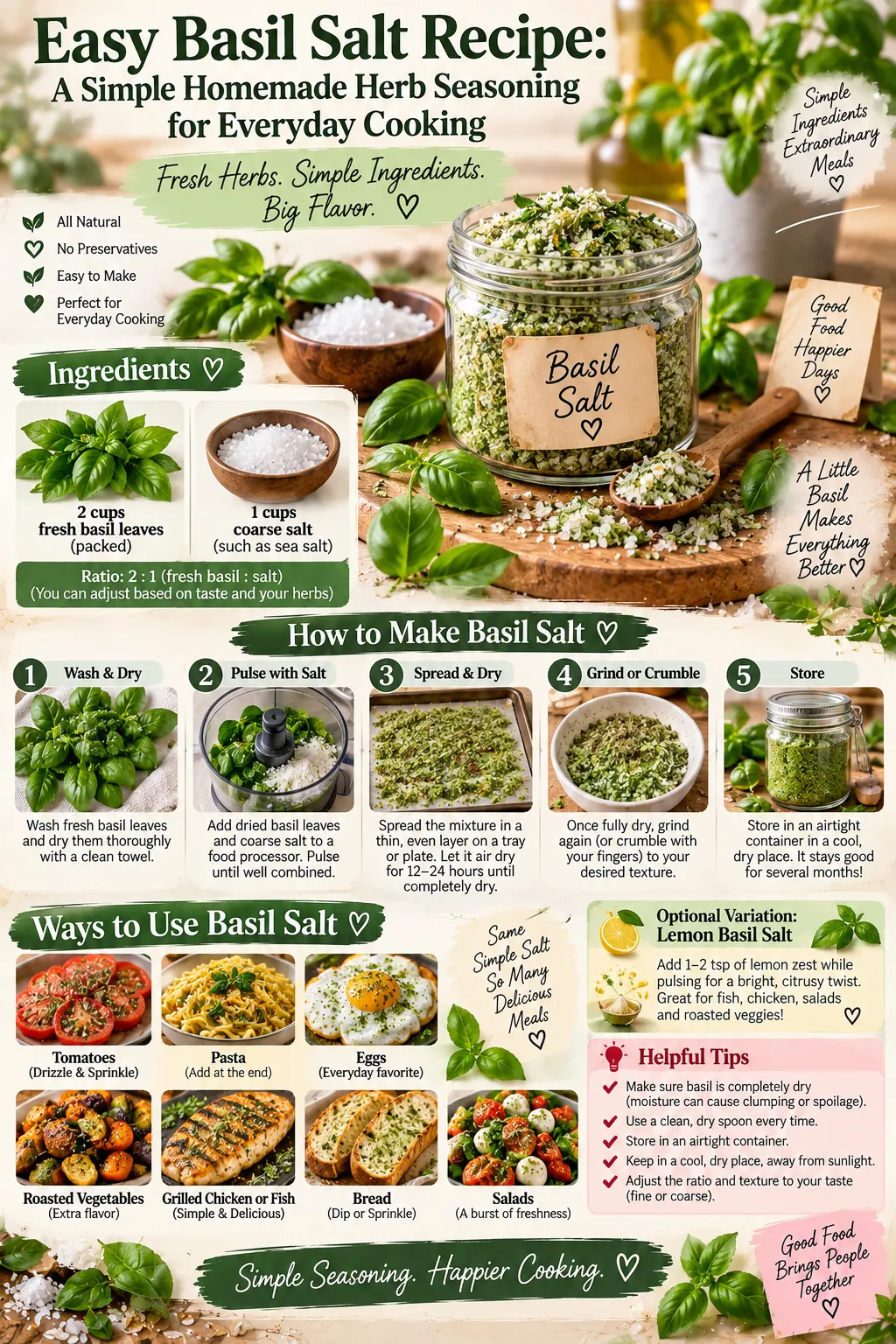
Easy Basil Salt Recipe: A Simple Homemade Herb Seasoning for Everyday Cooking
Basil salt is one of those tiny kitchen projects that can make everyday food feel much more special. Fresh basil and coarse salt are combined, dried thoroughly, then stored as a fragrant seasoning for tomatoes, pasta, eggs, vegetables, grilled foods, bread, and salads.
Quick Takeaways
- Use completely dry basil to reduce moisture-related clumping or spoilage.
- A simple 2:1 fresh-basil-to-salt starting ratio is shown in the guide.
- Dry the mixture completely before storing it.
- Try lemon zest, chili, garlic, or other herbs for variations.
Ingredients and Ratio
The infographic uses 2 cups packed fresh basil leaves and 1 cup coarse salt as a starting ratio. You can adjust the balance to taste, especially if you want a stronger herb aroma or a more traditional salty seasoning.
Sea salt or another coarse salt can work. Avoid introducing unnecessary moisture because the goal is a dry seasoning that stores well.
How to Make Basil Salt
Wash the basil and dry it thoroughly with a clean towel. Add the basil and salt to a food processor and pulse until the leaves are finely distributed through the salt.
Spread the mixture in a thin, even layer on a tray and let it air-dry until completely dry. The guide uses roughly 12–24 hours as a drying window, depending on moisture and room conditions. Once dry, crumble or grind to the texture you prefer and transfer it to a clean airtight container.
Ways to Use Basil Salt
Sprinkle it over sliced tomatoes, eggs, pasta, roasted vegetables, grilled chicken or fish, bread, and salads. It is especially useful when a dish needs a quick finishing touch of herb flavor without measuring several separate seasonings.
Start with a small pinch because the salt is concentrated. Taste the food first, then add more if needed.
Lemon Basil Salt
For a brighter variation, add a small amount of finely grated lemon zest while pulsing. Lemon basil salt can work with fish, chicken, salads, roasted vegetables, or simple grain dishes.
Because fresh zest adds moisture, use it carefully and dry the finished mixture thoroughly before storage.
Storage and Food-Safety Tips
Moisture is the main enemy of a homemade dry seasoning. Store basil salt in a clean, dry, airtight container away from sunlight and use a dry spoon each time.
If the mixture develops an unusual smell, visible moisture, mold, or other signs of spoilage, discard it rather than trying to rescue it. Drying time varies, so do not rely only on the clock—check that it is genuinely dry.
More Variations
Try garlic basil salt, chili basil salt, lemon-herb salt, or a mixed-herb version using thyme, rosemary, or parsley. Keep the same basic principle: combine the herbs with salt, dry completely, then store airtight.
Small batches are often easiest because the aroma of fresh basil is strongest when the seasoning is relatively fresh.
Frequently Asked Questions
What is basil salt made of?
A simple basil salt uses fresh basil and coarse salt. The guide starts with a 2:1 fresh-basil-to-salt ratio.
How long does basil salt need to dry?
The guide suggests roughly 12–24 hours, but actual drying time depends on the moisture in the basil and the environment.
Why does basil salt need to be completely dry?
Moisture can cause clumping and may shorten the storage life of a homemade seasoning.
Can I use dried basil instead?
Yes, but the ratio and texture will differ because dried basil contains much less moisture than fresh basil.
What salt is best for basil salt?
Coarse sea salt or another coarse seasoning salt is a practical starting choice.
How should I store basil salt?
Keep it in a clean, airtight container in a cool, dry place away from direct sunlight.
How long does homemade basil salt last?
It can keep for months when thoroughly dried and stored properly, but discard it if you notice moisture, mold, or an off smell.
Can I add lemon zest?
Yes. Lemon zest makes a bright variation, but because zest adds moisture, dry the finished mixture thoroughly.
Can I make garlic basil salt?
Yes. Garlic can be added for a savory variation, but fresh garlic introduces moisture, so the mixture must be dried completely and stored carefully.
What foods go with basil salt?
Tomatoes, pasta, eggs, roasted vegetables, grilled chicken or fish, bread, and salads are easy places to start.
Can I use basil salt as a finishing salt?
Yes. A small pinch can work well as a finishing seasoning, especially on simple dishes where basil flavor stands out.
Why is my basil salt clumping?
Residual moisture is the most likely reason. Spread it thinly and allow it to dry completely before storage.
Can I make basil salt without a food processor?
Yes. Finely chop the basil and mix it with the salt, then spread and dry the mixture thoroughly.
Can I use frozen basil?
Fresh or properly dried basil is easier to manage. Frozen basil can introduce extra moisture, so it would need careful drying.
How much basil salt should I use?
Start with a small pinch, taste, and add more as needed because the seasoning is salt-forward.
Final Takeaway
Basil salt is one of those tiny kitchen projects that can make everyday food feel much more special. Fresh basil and coarse salt are combined, dried thoroughly, then stored as a fragrant seasoning for tomatoes, pasta, eggs, vegetables, grilled foods, bread, and salads. Save this guide to revisit when you are planning your next meal, routine, gift, or style update.
More Ideas You May Like

Best Birthday Gifts for Best Friend That They'll Absolutely Love (2026 Gift Guide)
Looking for birthday gifts for your best friend? Explore 25 thoughtful, cute, personalized, practical, and memorable ideas for every personality and budget.
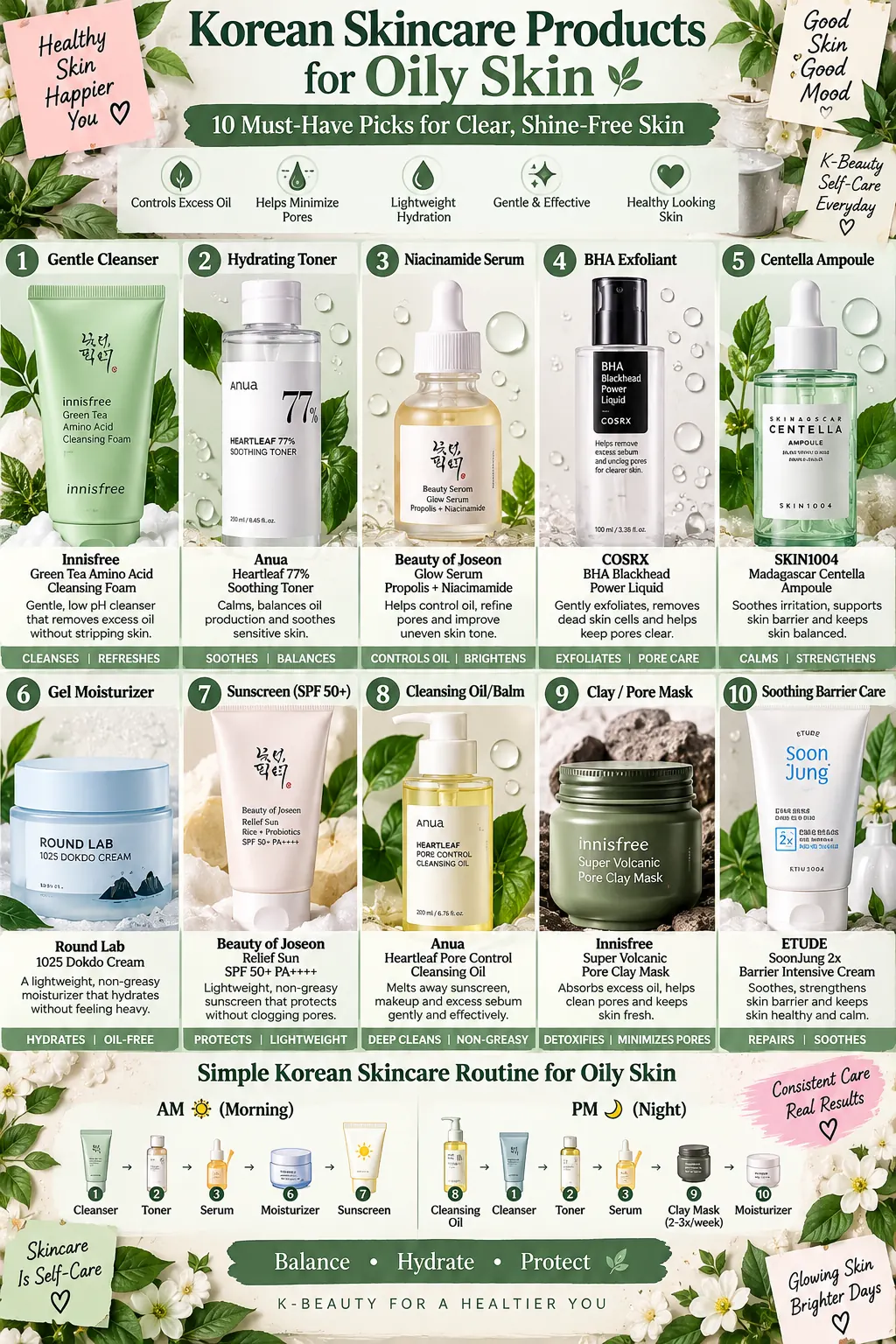
Korean Skincare Products for Oily Skin: 10 Must-Have Picks for Clear, Shine-Free Skin
Explore 10 Korean skincare product types for oily skin, plus a simple AM and PM routine, ingredient tips, common mistakes, and ways to avoid over-drying your skin.
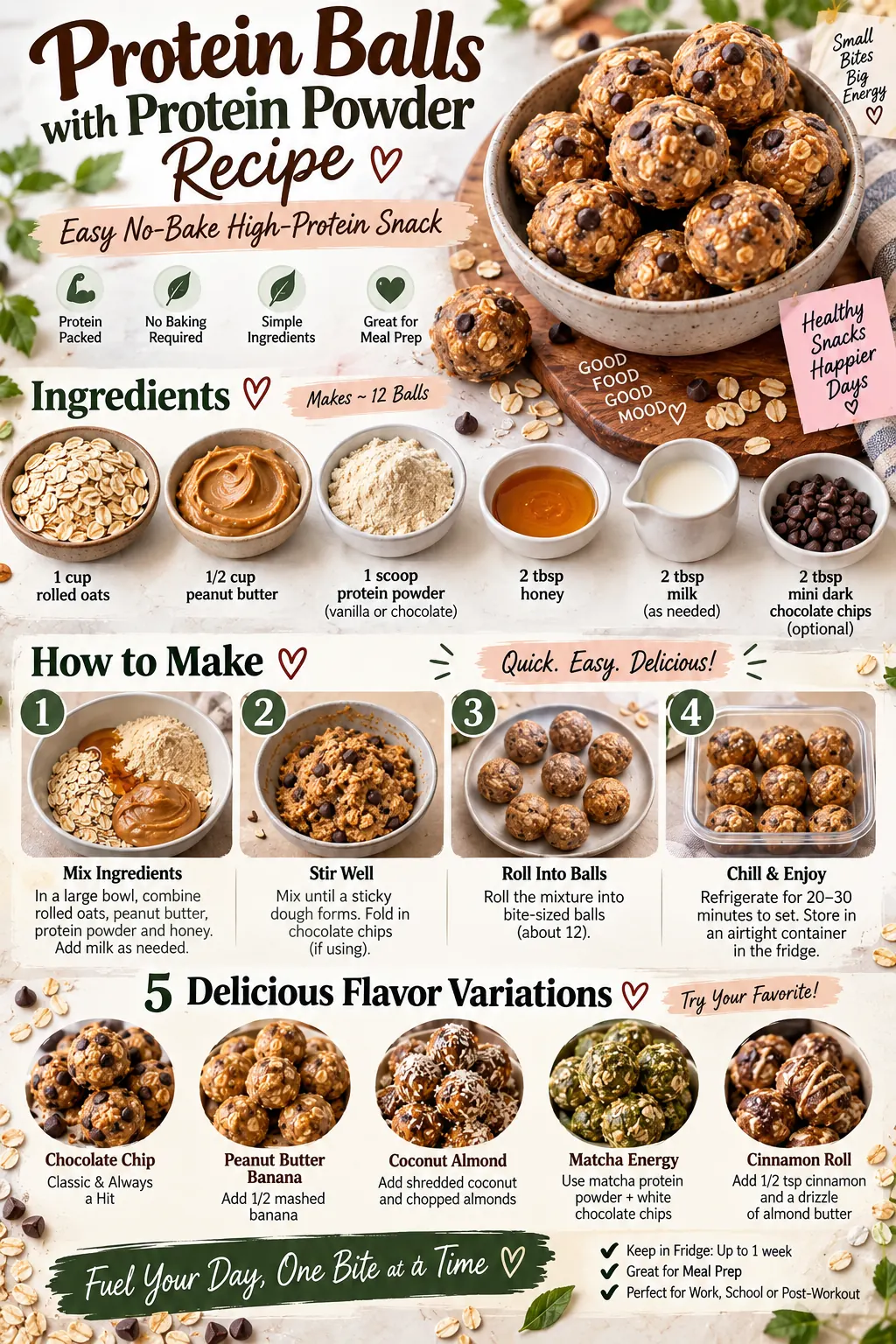
Protein Balls with Protein Powder Recipe: Easy No-Bake High-Protein Snack
Make easy no-bake protein balls with protein powder, oats, peanut butter, honey, and optional chocolate chips. Includes flavor variations and storage tips.