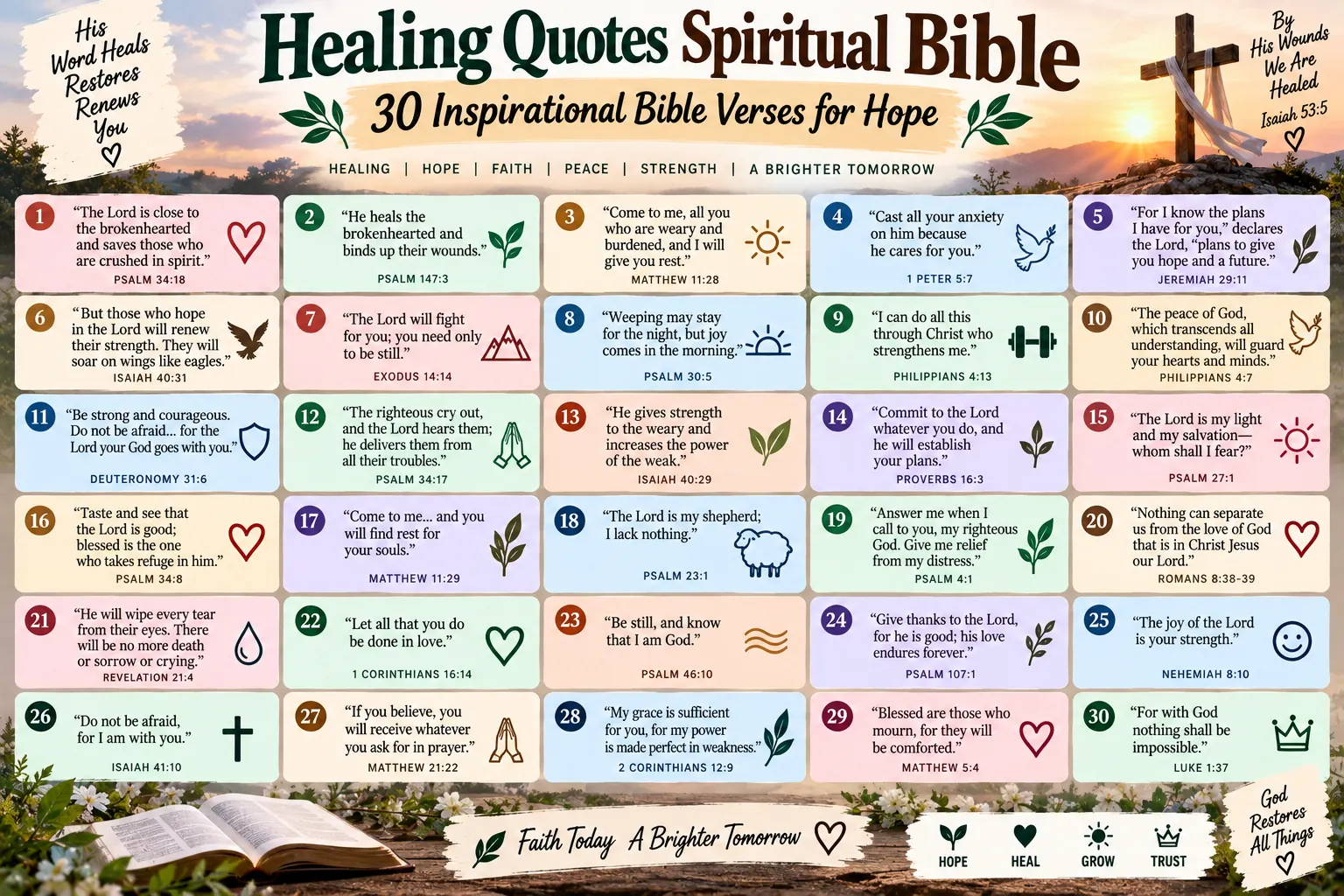
Healing Quotes Spiritual Bible: 30 Inspirational Bible Verses for Hope
This collection brings together Bible passages commonly associated with hope, comfort, courage, healing, and trust. Instead of reproducing long copyrighted translations, each entry gives a short paraphrased reflection alongside a Scripture reference so you can open your preferred Bible translation and read the full passage in context.
How to use Scripture for reflection
Choose one passage that speaks to your current season, read the surrounding verses, and sit with one phrase or idea. A short prayer, journal entry, or quiet moment can help turn a verse reference into a personal practice.
30 easy ideas
1. Psalm 34:18 — Near to the brokenhearted
A reminder that God is close to people who are hurting and does not ignore a wounded heart.
2. Psalm 147:3 — Healing wounds
A picture of God caring for broken places and tending to emotional wounds.
3. Matthew 11:28 — Rest for the weary
An invitation to bring weariness and heavy burdens to Christ and receive rest.
4. 1 Peter 5:7 — Give God your worries
A reminder that you can bring anxiety and concerns to God because you are cared for.
5. Jeremiah 29:11 — Hope and a future
A passage often read as a reminder of God’s purposes and the hope of a future.
6. Isaiah 40:31 — Renewed strength
Those who place their hope in the Lord are pictured as receiving renewed strength to keep going.
7. Exodus 14:14 — Be still
A reminder that you do not have to carry every battle by your own strength.
8. Psalm 30:5 — Morning after night
A hopeful image of sorrow not having the final word and joy arriving again.
9. Philippians 4:13 — Strength in Christ
A statement about receiving strength through Christ to face what lies ahead.
10. Philippians 4:7 — Peace beyond understanding
A promise-like picture of God’s peace guarding heart and mind.
11. Deuteronomy 31:6 — Courage and presence
A call to be strong and courageous because God goes with His people.
12. Psalm 34:17 — God hears cries
A reminder that God hears the cries of the hurting and responds with care.
13. Isaiah 40:29 — Strength for the weak
A reminder that God gives strength to the weary and power to those who feel weak.
14. Proverbs 16:3 — Commit your work
An invitation to place your plans before God and trust Him with their direction.
15. Psalm 27:1 — Light and salvation
A declaration that the Lord is light, salvation, and a reason not to live in fear.
16. Psalm 34:8 — Taste and see
An invitation to experience God’s goodness and find refuge in Him.
17. Matthew 11:29 — Rest for the soul
A call to learn from Christ and find a gentler kind of rest.
18. Psalm 23:1 — The Shepherd
A comforting image of God as a shepherd who guides and provides.
19. Psalm 4:1 — Relief from distress
A prayer asking God to hear, answer, and bring relief during distress.
20. Romans 8:38–39 — Nothing separates from love
A powerful reminder that neither present troubles nor future fears can separate believers from God’s love in Christ.
21. Revelation 21:4 — Tears will end
A future-focused picture of God wiping away tears and ending death, mourning, crying, and pain.
22. 1 Corinthians 16:14 — Do everything in love
A simple principle that places love at the center of everyday action.
23. Psalm 46:10 — Be still and know
An invitation to pause, recognize God, and remember that He is God.
24. Psalm 107:1 — Give thanks
A reminder to give thanks for God’s goodness and enduring love.
25. Nehemiah 8:10 — Joy and strength
A reminder that joy in the Lord can become a source of strength.
26. Isaiah 41:10 — Do not fear
A message of God’s presence, help, and sustaining strength in fearful moments.
27. Matthew 21:22 — Ask in prayer
A teaching that connects prayer with faith and trust in God.
28. 2 Corinthians 12:9 — Grace in weakness
A passage emphasizing sufficient grace and the way divine power can be seen in weakness.
29. Matthew 5:4 — Comfort for those who mourn
A short promise of comfort for people experiencing grief.
30. Luke 1:37 — Nothing impossible with God
A statement about God’s ability that encourages trust when circumstances seem impossible.
A gentle way to read difficult passages
Read the full chapter rather than isolating a single sentence, notice who is speaking and why, and compare translations if a phrase is unclear. Scripture can offer spiritual encouragement without pretending that grief or hardship disappears instantly.
Hope without rushing the healing process
Biblical hope and honest sorrow can exist together. Give yourself permission to name what hurts while still making room for prayer, community, rest, and the possibility of a better tomorrow.
Journal prompts for these verses
What part of this passage gives me hope? What am I carrying that I could bring to God? What would trust look like today? What support do I need from people around me?
A note about translations
Bible wording varies by translation and some modern translations have usage restrictions. The entries here are intentionally paraphrased; read the complete verse in the translation you use.
Frequently Asked Questions
Which Bible verse is good for hope?
Jeremiah 29:11, Romans 8:38–39, Psalm 30:5, and Isaiah 40:31 are commonly turned to for themes of hope, endurance, and God’s care. Read each in context.
What Bible verse is about healing?
Psalm 147:3 is directly associated with God healing the brokenhearted, while other passages address comfort, strength, and restoration.
What verse helps with anxiety?
1 Peter 5:7 and Philippians 4:6–7 are commonly read when reflecting on worry and prayer.
What verse is about strength?
Isaiah 40:31 and Isaiah 40:29 are strong references for themes of renewed strength.
What verse is about peace?
Philippians 4:7 is closely associated with God’s peace guarding heart and mind.
What verse is about grief?
Matthew 5:4 and Psalm 34:18 are often read during grief and emotional pain.
Can I pray using a Bible verse?
Yes. Read the passage, reflect on its meaning, and turn its themes into a personal prayer.
Should I read the whole chapter?
Yes. Context can clarify meaning and prevent a single sentence from being interpreted too narrowly.
Can Scripture replace professional help?
Spiritual reflection can be meaningful, but it does not replace medical, mental-health, or other professional care when such support is needed.
How can I memorize a verse?
Choose one short passage, read it repeatedly, write it by hand, and connect it with a daily cue.
Can I use these verses in a journal?
Yes. Write the reference, your preferred translation, and a personal reflection.
Why do different Bibles have different wording?
Different translations make different choices about language, readability, and textual tradition.
What is a good verse for courage?
Deuteronomy 31:6 and Isaiah 41:10 are useful references for courage and God’s presence.
What is a verse for feeling alone?
Psalm 34:18 and Matthew 28:20 are often read for themes of God’s nearness and presence.
How can I make a daily Bible habit?
Choose a consistent time, read a small passage, reflect briefly, and keep the routine realistic enough to repeat.
Final Thoughts
Save this guide for the next time you want an easy idea, a little inspiration, or a fresh way to enjoy something familiar. The best choice is usually the one that fits your real life and feels easy enough to come back to.
More Ideas You May Like

Apple Cinnamon Baked Oats Breakfast
Make a cozy apple cinnamon baked oats breakfast with simple pantry ingredients, warm spices, and easy variations for busy mornings.

Apple Desserts Recipes: 20 Cozy Homemade Desserts to Try
Try 20 cozy homemade apple dessert recipes including pies, crisps, crumbles, turnovers, muffins, cakes, fritters, and warm baked treats.

Apple Fritters Recipe with Pie Filling: 15 Easy Homemade Ideas
Try 15 easy apple fritter ideas using pie filling, from classic glazed fritters to caramel, pecan, cinnamon-sugar, air-fryer, and baked variations.

Blond Balayage Hair on Brown Hair: 25 Gorgeous Color Ideas
Explore 25 blond balayage ideas on brown hair, including honey, ash, caramel, beige, champagne, face-framing, dimensional, and lived-in looks.

Chicken Green Bean Casserole Keto
Try a creamy keto chicken green bean casserole with tender chicken, green beans, cheese, and easy low-carb dinner variations.

Fall Dessert Recipes Pumpkin Spice: 25 Cozy & Delicious Treats
Explore 25 cozy fall dessert ideas featuring pumpkin spice, warm cinnamon, creamy fillings, cookies, cakes, bars, and easy seasonal treats.

Feminism Quotes About Clothing: 25 Empowering Quotes About Fashion & Freedom
Explore 25 original quote-style messages about clothing, personal style, feminism, confidence, fashion, choice, and freedom.

Garlic Parmesan Chicken Meatloaf Recipe: Easy & Delicious Dinner
Make a juicy garlic Parmesan chicken meatloaf with simple ingredients, herbs, breadcrumbs, and an optional cheesy topping for an easy family dinner.