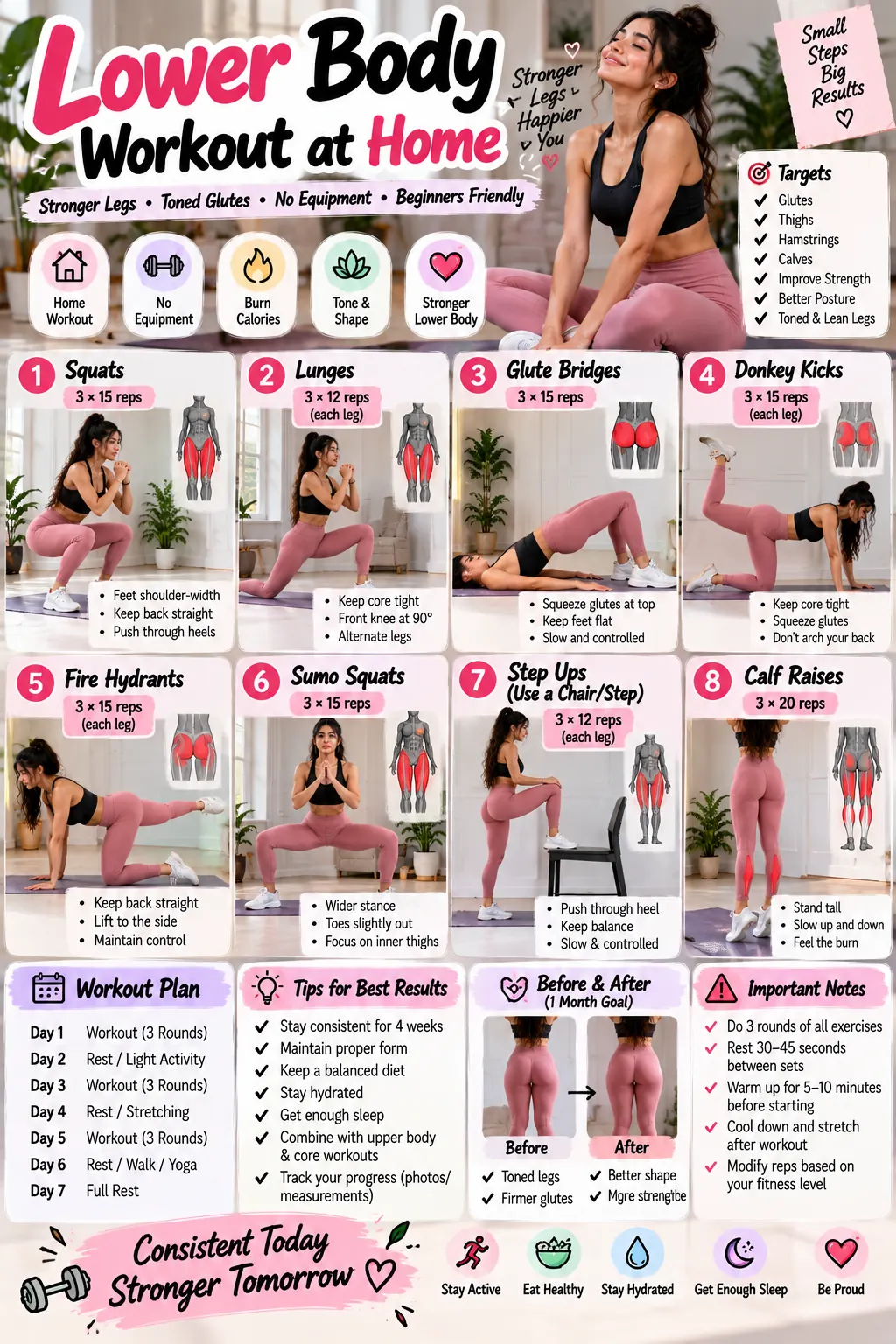
Lower Body Workout at Home: 8 Beginner-Friendly Exercises
A lower-body routine can be done at home with little or no equipment. Focus on controlled movement, comfortable range of motion, good form and gradual progression instead of trying to make every session exhausting.
Quick Takeaways
- Squats
- Lunges
- Glute bridges
- Donkey kicks
- Fire hydrants
- Sumo squats
- Step-ups
- Calf raises
What This Guide Covers
A lower-body routine can be done at home with little or no equipment. Focus on controlled movement, comfortable range of motion, good form and gradual progression instead of trying to make every session exhausting.
This page is designed as a practical reference: skim the list for quick inspiration, then use the deeper sections for planning, swaps, preparation, consistency and common mistakes. The goal is to give you enough context to choose an option rather than simply collecting a list of ideas.
Use the infographic at the top as a visual index. Each idea can be adapted to different schedules, preferences and experience levels, which makes the guide useful for both quick inspiration and longer-term planning.
Ideas to Try
A simple starting point
Squats; Lunges; Glute bridges; Donkey kicks; Fire hydrants are useful starting points because they are easy to recognize and adapt. Begin with one or two favorites, learn what works for you, and then rotate in new options.
More ideas for variety
Sumo squats; Step-ups; Calf raises can help prevent the routine from becoming repetitive. Mix familiar choices with one new idea at a time so the process stays manageable.
When adapting an idea, keep the main purpose in mind. For meals, think about balance and flavor; for fitness, think about form and progression; for beauty, think about gentle, evidence-aware care; and for lifestyle topics, think about consistency and enjoyment.
How to Make the Ideas Work for Real Life
A sustainable routine usually combines strength work, movement, recovery and nutrition rather than relying on one intense session. Start with a level that allows controlled repetitions and increase difficulty gradually by adding repetitions, sets, resistance or time.
Instead of trying to overhaul everything in one day, choose a small starting set. Put the most important step where you will naturally see it: prep ingredients when you already cook, keep workout clothes ready, organize beauty products by frequency of use, or schedule a short reset during a predictable part of the day.
Make the routine flexible enough for imperfect days. A shorter walk, a simplified dinner, a five-minute reset or a basic skincare routine can still keep the habit alive when your schedule gets busy.
Planning, Prep & Consistency
Track consistency instead of chasing perfection. A simple weekly log can record sessions completed, repetitions, energy, sleep and how movements feel. Rest days are part of the plan and can make the routine easier to maintain.
Use a weekly checklist to decide what needs preparation, what can be done spontaneously and what should remain optional. For food, plan leftovers and storage; for fitness, schedule recovery; for beauty, check product compatibility and expiration; for home organization, leave a little empty space so the system stays usable.
Consistency becomes easier when the environment supports it. Remove unnecessary steps, keep frequently used items accessible and make the desired action easier than the alternative.
Simple Tips & Common Mistakes
Warm up before training with easy movement and dynamic mobility, then keep the main exercises controlled. Stop if you feel sharp pain, dizziness or unusual symptoms, and use a qualified professional for individualized guidance when needed.
- Do not assume more is always better; simple routines are often easier to maintain.
- Adjust portions, intensity, ingredients and frequency to your own needs.
- Use variety instead of relying on one food, exercise, product or habit.
- Keep safety, hygiene and appropriate storage in mind.
- Give yourself time to evaluate whether a routine actually fits your life.
Most importantly, use this guide as inspiration rather than a strict rulebook. A useful idea is one that you can understand, adapt and repeat comfortably.
Frequently Asked Questions
What is a good idea for squats?
Squats can be used as one option in this guide. Adjust ingredients, portions, intensity or presentation to suit your needs and preferences.
What is a good idea for lunges?
Lunges can be used as one option in this guide. Adjust ingredients, portions, intensity or presentation to suit your needs and preferences.
What is a good idea for glute bridges?
Glute bridges can be used as one option in this guide. Adjust ingredients, portions, intensity or presentation to suit your needs and preferences.
What is a good idea for donkey kicks?
Donkey kicks can be used as one option in this guide. Adjust ingredients, portions, intensity or presentation to suit your needs and preferences.
What is a good idea for fire hydrants?
Fire hydrants can be used as one option in this guide. Adjust ingredients, portions, intensity or presentation to suit your needs and preferences.
How do I choose the right ideas from this guide?
Start with the options that match your time, budget, preferences and current routine. You do not need to use every idea at once.
Can I customize these ideas?
Yes. Most of the ideas are flexible. Swap ingredients, flavors, formats or routines while keeping the overall goal of the guide.
How often should I use these ideas?
Frequency depends on the topic and your personal needs. Use variety and avoid treating one routine or ingredient as a guaranteed solution.
What should beginners do first?
Pick two or three simple ideas and practice them consistently before adding more complexity.
Can I prepare these ideas ahead?
Many food, beauty, organization and routine ideas can be prepared or organized ahead. Check storage and product instructions where relevant.
How can I make this more budget friendly?
Use seasonal ingredients, pantry staples, reusable organizers and multipurpose products, and prioritize the ideas that solve the biggest need first.
How can I make this family friendly?
Keep flavors flexible, offer choices and let each person adjust portions or toppings when appropriate.
What if one idea does not work for me?
Skip it and try another option. Individual preferences and responses vary, so one idea is not a universal requirement.
Can I save this guide for later?
Yes. Save the page or the Pinterest image so you can return when planning meals, routines, workouts or room updates.
Is this a replacement for professional advice?
No. General lifestyle content is not a diagnosis or individualized professional plan. Seek qualified advice for medical, mental-health, nutrition, fitness or skin concerns that require personal assessment.
Final Takeaway
A lower-body routine can be done at home with little or no equipment. Focus on controlled movement, comfortable range of motion, good form and gradual progression instead of trying to make every session exhausting. The best way to use this guide is to choose a few ideas that genuinely fit your routine, personalize them where needed and return to the page whenever you need fresh inspiration.
Save the guide for later, share it with someone who would find it useful, and keep the focus on practical habits that make everyday life easier, healthier or more enjoyable.
More Ideas You May Like
Explore More Recipes, Wellness, Beauty & Lifestyle Ideas
Browse more practical guides and visual inspiration across food, wellness, beauty, fitness and everyday lifestyle topics.
Healthy Recipes Dinner Zucchini
Explore another practical dinner guide with flexible ingredients and weeknight-friendly ideas.
Health and Fitness Tips for Lifestyle
Find more everyday ideas for building sustainable health and fitness habits.