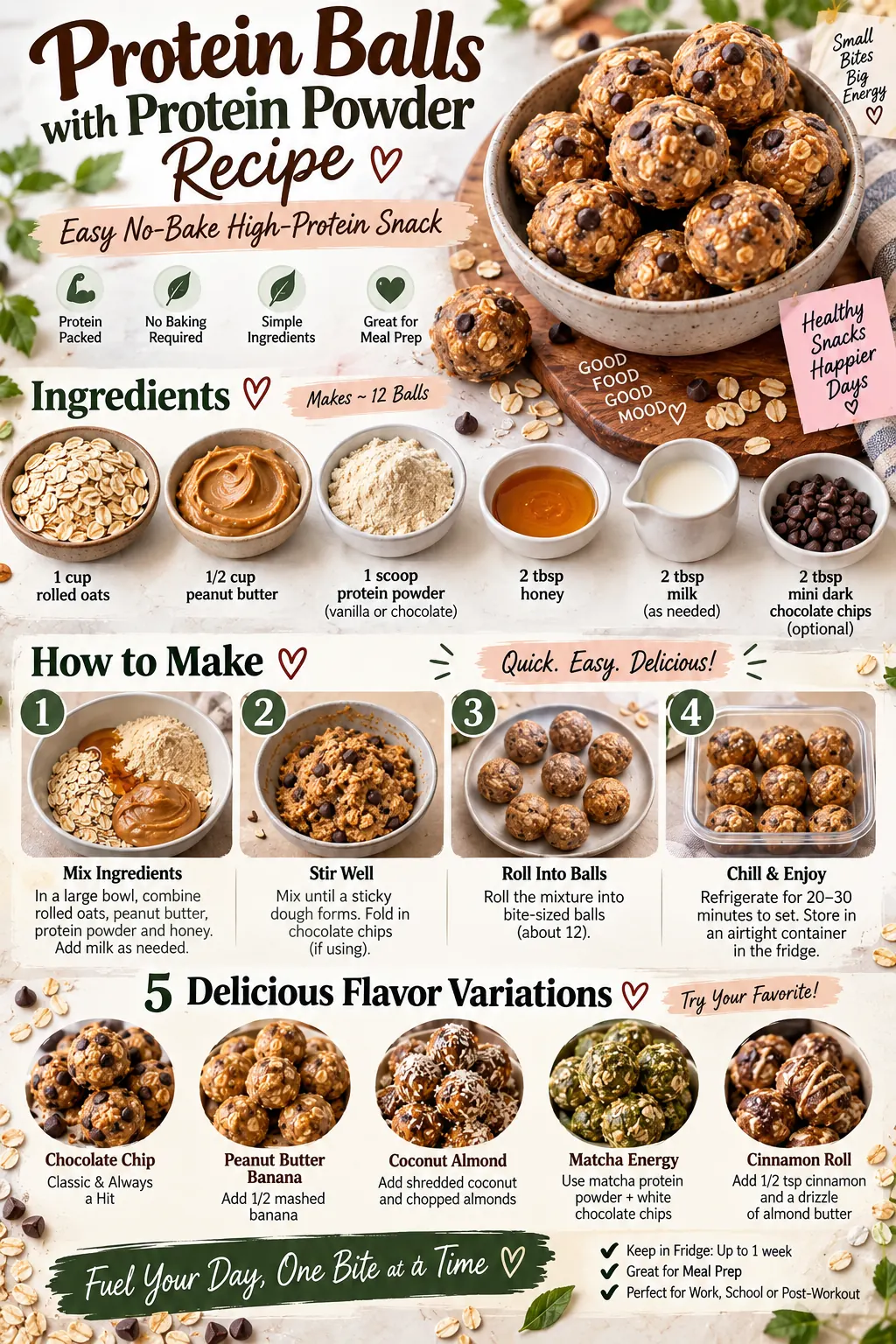
Protein Balls with Protein Powder Recipe: Easy No-Bake High-Protein Snack
These protein balls are designed for the moments when you want a quick snack without turning on the oven. Rolled oats provide structure, peanut butter adds richness, protein powder boosts the protein content, and a little honey helps the mixture hold together.
Quick Takeaways
- No baking is required.
- The base can be adjusted with different nut or seed butters.
- Add a splash of milk only when the mixture needs help coming together.
- Chill the finished balls before storing them in the refrigerator.
Ingredients
For about 12 balls, use 1 cup rolled oats, 1/2 cup peanut butter, 1 scoop protein powder, 2 tablespoons honey, 2 tablespoons milk as needed, and 2 tablespoons mini dark chocolate chips if desired.
Choose a protein powder whose flavor and sweetness you enjoy because it noticeably affects the final taste. For a less sweet version, reduce the honey and add a little more peanut butter or oats if the texture allows.
How to Make Protein Balls
Combine the oats, protein powder, peanut butter, and honey in a bowl. Stir until the mixture starts to look like a thick dough; if it is too dry, add milk a teaspoon or small splash at a time.
Fold in chocolate chips or another mix-in, then roll into bite-sized balls with slightly damp hands. Refrigerate for about 20–30 minutes so they firm up before serving.
5 Easy Flavor Variations
Chocolate chip is the easiest classic. For peanut-butter banana, mix in a little mashed banana and add oats if needed. Coconut almond works with shredded coconut and chopped almonds. A matcha version can use matcha-flavored protein powder, while cinnamon roll balls can use cinnamon and a small drizzle of nut butter.
Keep additions modest. Wet ingredients can make the mixture too soft, while large nuts or dried fruit can make the balls harder to shape. Adjust with oats or a small amount of milk until the texture is rollable.
Protein Ball Texture Troubleshooting
If the mixture crumbles, add a little more nut butter or milk. If it is sticky and difficult to roll, add oats or another dry ingredient one spoon at a time. Different protein powders absorb liquid differently, so the exact texture will vary.
Avoid adding a large amount of liquid at once. It is much easier to loosen a dry mixture gradually than to rescue a wet mixture.
Storage and Meal Prep
Store the balls in an airtight container in the refrigerator. The infographic suggests enjoying them within about a week for best texture. If you want to make a larger batch, portion them before refrigerating so they are ready to grab.
For longer storage, you can freeze portions in a freezer-safe container. Thaw in the refrigerator and check the texture before eating.
When to Enjoy Them
Protein balls can work as a snack between meals, a portable breakfast add-on, or a convenient post-workout food. They are still a snack, not a replacement for a varied diet, so pair them with fruit, yogurt, or another food when you need a more complete meal.
Because protein powder varies by brand, use the nutrition label on your specific product when calculating protein or calories rather than relying on a generic estimate.
Frequently Asked Questions
How many protein balls does this recipe make?
The base recipe makes about 12 bite-sized balls, depending on how large you roll them.
Do protein balls need to be baked?
No. This recipe is a no-bake mixture that sets in the refrigerator.
Can I use chocolate protein powder?
Yes. Chocolate protein powder works well with peanut butter and chocolate chips.
What if my protein ball mixture is too dry?
Add a small amount of milk or extra nut butter gradually until the mixture holds together.
What if the mixture is too sticky?
Add a little more rolled oats or another dry ingredient until it becomes easy to roll.
Can I use almond butter instead of peanut butter?
Yes. Almond butter or another nut or seed butter can work, although the texture may change slightly.
Can I make protein balls without honey?
You can experiment with another sticky ingredient, but the amount may need adjustment because sweeteners differ in moisture and thickness.
How long do protein balls last in the fridge?
For best texture, use the batch within about a week when kept refrigerated in an airtight container.
Can protein balls be frozen?
Yes. Freeze them in an airtight freezer-safe container and thaw them in the refrigerator.
Are protein balls a good breakfast?
They can be part of breakfast, but most people will get a more balanced meal by pairing them with fruit, dairy or a dairy alternative, and other nutrient-rich foods.
Can I add chia seeds?
Yes. Chia, flax, hemp seeds, or finely chopped nuts can add texture and variety; add them gradually so the mixture stays rollable.
Can I make them nut-free?
Use a suitable seed butter and check the protein powder and other ingredients for allergy considerations.
Why are my protein balls falling apart?
The mixture may need more binding ingredients or a little moisture. Protein powders absorb different amounts of liquid, so adjust gradually.
Can I add dried fruit?
Yes. Finely chopped dates, raisins, cranberries, or other dried fruit can work, but keep the amount moderate to maintain the right texture.
How much protein is in each ball?
It depends on the protein powder and portion size. Divide the total protein listed on your ingredient labels by the number of balls you make for a personalized estimate.
Final Takeaway
These protein balls are designed for the moments when you want a quick snack without turning on the oven. Rolled oats provide structure, peanut butter adds richness, protein powder boosts the protein content, and a little honey helps the mixture hold together. Save this guide to revisit when you are planning your next meal, routine, gift, or style update.
More Ideas You May Like

Best Birthday Gifts for Best Friend That They'll Absolutely Love (2026 Gift Guide)
Looking for birthday gifts for your best friend? Explore 25 thoughtful, cute, personalized, practical, and memorable ideas for every personality and budget.
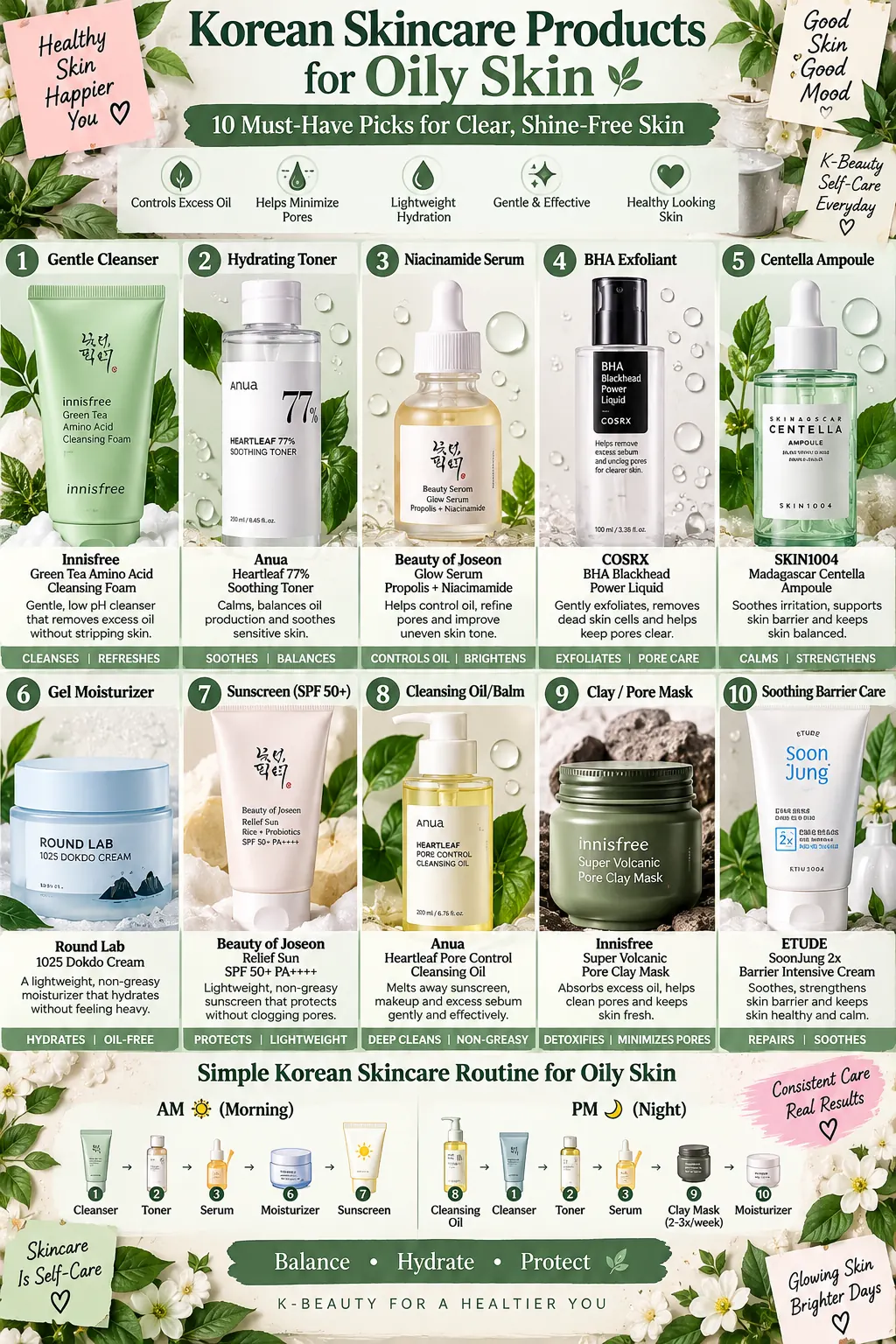
Korean Skincare Products for Oily Skin: 10 Must-Have Picks for Clear, Shine-Free Skin
Explore 10 Korean skincare product types for oily skin, plus a simple AM and PM routine, ingredient tips, common mistakes, and ways to avoid over-drying your skin.
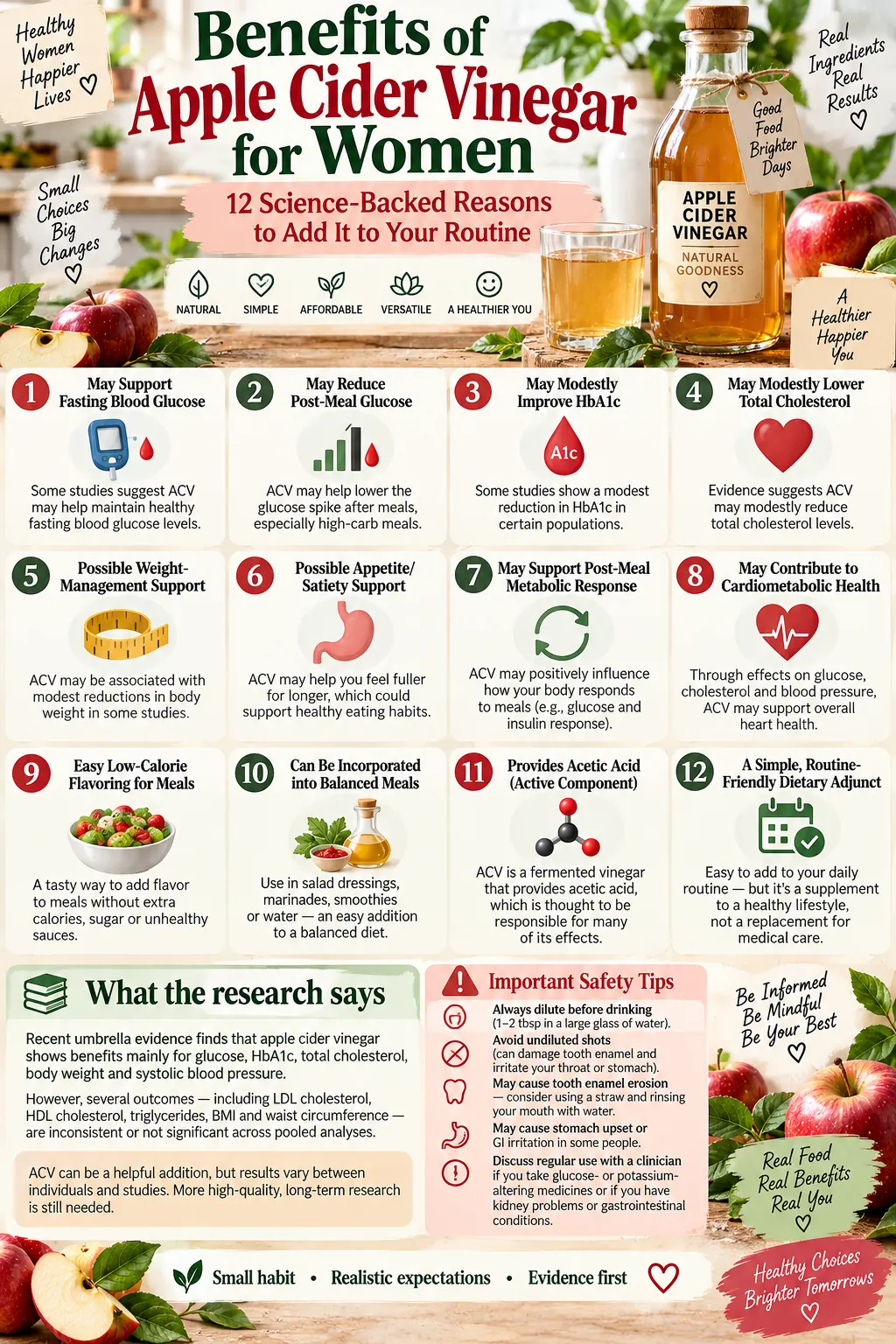
Benefits of Apple Cider Vinegar for Women: 12 Science-Backed Reasons to Add It to Your Routine
Explore 12 evidence-aware potential benefits of apple cider vinegar for women, including glucose, cholesterol, appetite, and meal-time uses, plus safety tips.