Pumpkin Pancake Recipes
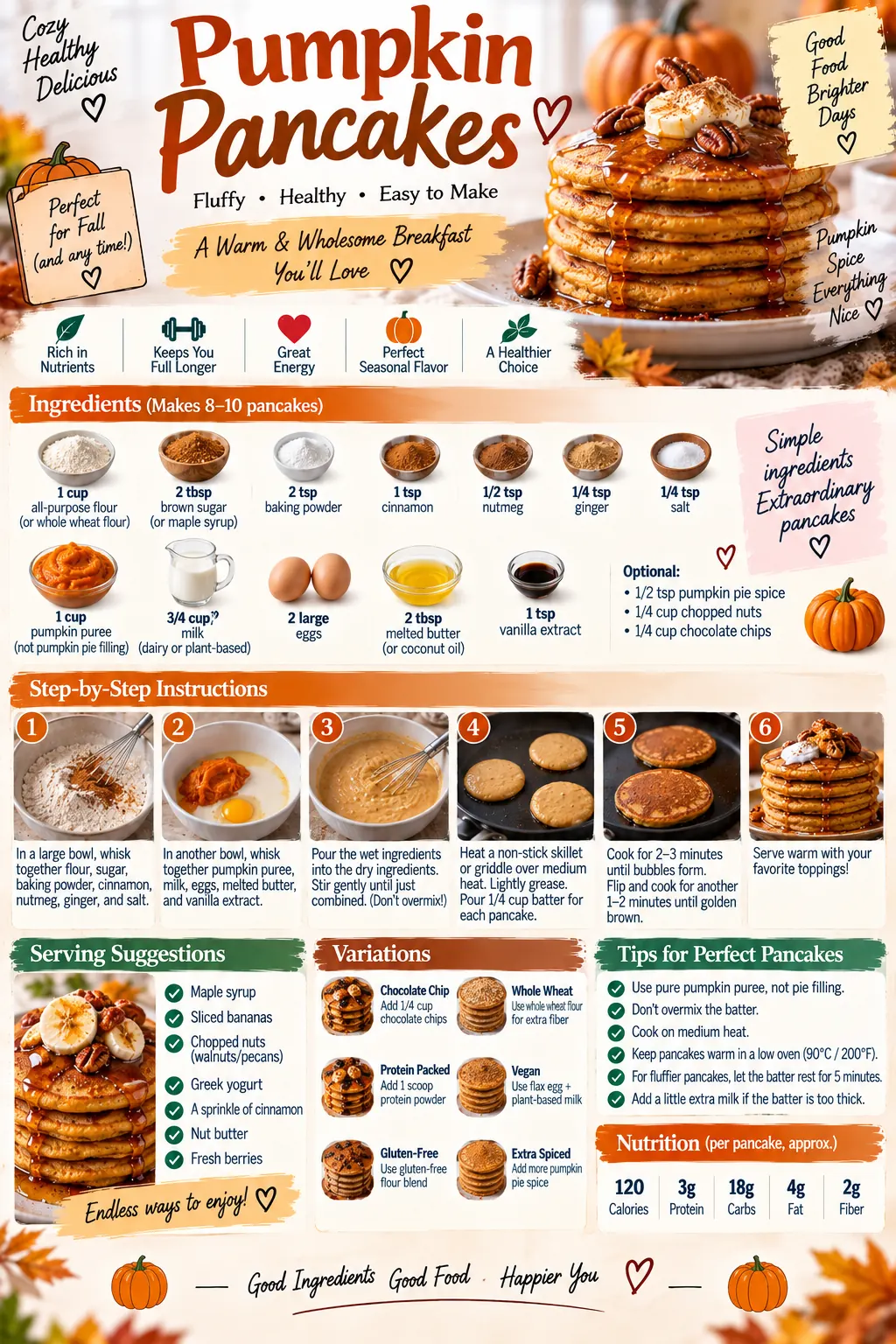
Fluffy pumpkin pancakes with warm spices, serving ideas, variations, and practical tips for a cozy breakfast.
The Base Batter
Whisk flour, baking powder, spices, and a pinch of salt. In another bowl combine pumpkin puree, milk, eggs, melted butter, and a little sweetener, then gently combine the two mixtures.
Keep Them Fluffy
Do not overmix the batter. A few small lumps are fine, and a short rest before cooking can help the texture.
Cook Over Moderate Heat
Use a lightly greased nonstick skillet or griddle over medium-low to medium heat. Flip when the surface bubbles and the edges look set.
Pumpkin Spice Variations
Try cinnamon, ginger, nutmeg, cloves, vanilla, chopped pecans, dark chocolate chips, or a little orange zest.
Serving Suggestions
Use maple syrup, yogurt, berries, sliced banana, nut butter, chopped nuts, or a light dusting of cinnamon.
Make Them More Filling
Use part whole-wheat or oat flour and pair the pancakes with yogurt, eggs, or nuts for more protein and staying power.
Storage and Reheating
Refrigerate leftovers in an airtight container for a few days or freeze them with parchment between pancakes. Reheat in a toaster, skillet, or oven.
Common Mistakes
Avoid pumpkin pie filling when the recipe calls for plain pumpkin puree, and avoid cooking at very high heat because the outside can brown before the center is done.
Frequently Asked Questions
Can I make these recipes ahead?
Many of the ideas can be partly prepared ahead. Store ingredients safely and finish or reheat close to serving time.
How can I make the recipe lighter?
Use reasonable portions, add vegetables, and choose lower-sugar or lower-sodium ingredients where practical.
Can I swap ingredients?
Yes. Use familiar substitutions that preserve the texture and cooking method.
How should leftovers be stored?
Cool food promptly, use covered containers, refrigerate per food-safety guidance, and reheat thoroughly.
Can I make this vegetarian?
Many recipes can be adapted with beans, lentils, tofu, eggs, or extra vegetables depending on the dish.
How do I increase protein?
Add a suitable protein source such as eggs, yogurt, chicken, fish, tofu, beans, or lean meat.
How do I add more vegetables?
Fold chopped or roasted vegetables into the main dish or serve them on the side.
What should I serve with it?
A simple salad, roasted vegetables, fruit, soup, or a whole-grain side can round out the meal.
Can I freeze leftovers?
Some cooked dishes freeze well. Check the texture after thawing and use airtight freezer-safe containers.
How do I reduce sodium?
Choose lower-sodium ingredients, season gradually, and use herbs, citrus, garlic, and spices for flavor.
Can I scale the recipe?
Yes, but adjust cookware size and cooking time as needed rather than multiplying cooking time automatically.
What if I do not have one ingredient?
Use a close substitute with similar moisture, texture, or flavor, and adjust seasoning as needed.
How do I know when it is done?
Use the recipe cues plus a food thermometer when cooking meat, poultry, or other foods where temperature matters.
Can I make a smaller portion?
Yes. Smaller portions are useful for testing a recipe or cooking for one or two people.
What is the easiest way to make it?
Prep ingredients first, keep the seasoning simple, and choose a method that minimizes dishes and active cooking time.
Final Thoughts
Keep the ideas that fit your life, make them your own, and focus on simple choices you can repeat. A useful routine does not have to be perfect to be worthwhile.