Sweet Potato and Sausage Dishes
Comforting sweet potato and sausage meals including skillet, bake, hash, stuffed potatoes, sheet-pan dinners, and soup.
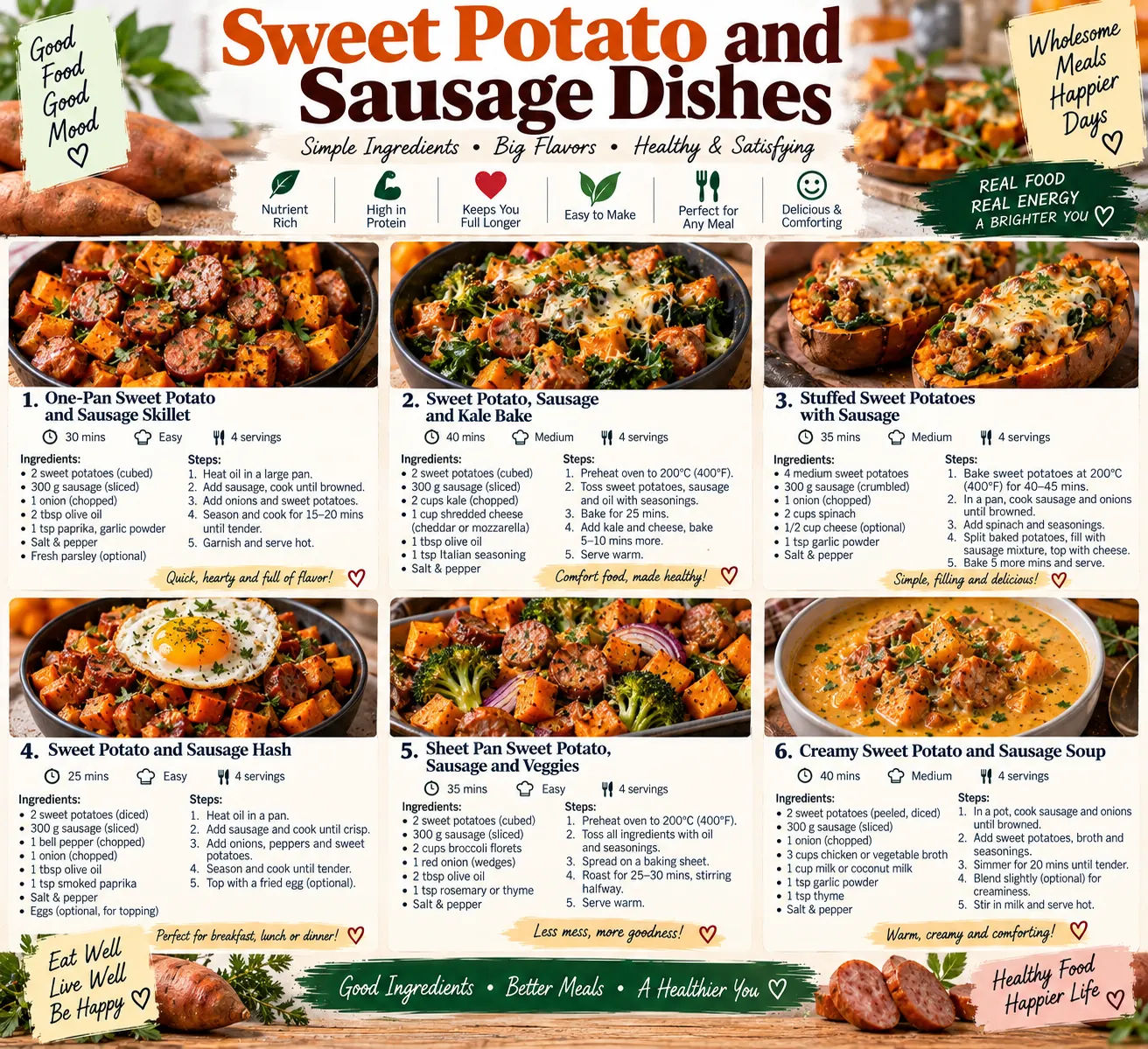
One-Pan Sweet Potato and Sausage Skillet
Brown sliced sausage, then cook cubed sweet potatoes with onion, garlic, and herbs until tender. Finish with fresh parsley or greens.
Sweet Potato, Sausage and Kale Bake
Toss cubed sweet potato, sausage, kale, olive oil, and seasonings on a sheet pan. Roast until the vegetables are tender and the sausage is fully cooked.
Stuffed Sweet Potatoes
Bake sweet potatoes until soft, split them open, and fill with cooked sausage, greens, onions, and a little cheese if desired.
Sweet Potato and Sausage Hash
Dice sweet potatoes small so they cook quickly. Add peppers and onions, then top the finished hash with an egg for a brunch-style meal.
Sheet-Pan Dinner
Combine sweet potato with broccoli, red onion, sausage, olive oil, and herbs for a low-mess dinner.
Creamy Sweet Potato and Sausage Soup
Simmer sweet potato, sausage, broth, onion, and herbs until tender. Blend part of the soup for a creamy texture while keeping some chunks.
Choosing Sausage
Check the label for sodium and saturated fat, and choose a variety that fits your dietary preferences. Chicken or turkey sausage can be used if preferred.
Make It a Balanced Meal
Add leafy greens or other vegetables and adjust the sausage portion to your needs for a satisfying, colorful plate.
Frequently Asked Questions
Can I make these recipes ahead?
Many of the ideas can be partly prepared ahead. Store ingredients safely and finish or reheat close to serving time.
How can I make the recipe lighter?
Use reasonable portions, add vegetables, and choose lower-sugar or lower-sodium ingredients where practical.
Can I swap ingredients?
Yes. Use familiar substitutions that preserve the texture and cooking method.
How should leftovers be stored?
Cool food promptly, use covered containers, refrigerate per food-safety guidance, and reheat thoroughly.
Can I make this vegetarian?
Many recipes can be adapted with beans, lentils, tofu, eggs, or extra vegetables depending on the dish.
How do I increase protein?
Add a suitable protein source such as eggs, yogurt, chicken, fish, tofu, beans, or lean meat.
How do I add more vegetables?
Fold chopped or roasted vegetables into the main dish or serve them on the side.
What should I serve with it?
A simple salad, roasted vegetables, fruit, soup, or a whole-grain side can round out the meal.
Can I freeze leftovers?
Some cooked dishes freeze well. Check the texture after thawing and use airtight freezer-safe containers.
How do I reduce sodium?
Choose lower-sodium ingredients, season gradually, and use herbs, citrus, garlic, and spices for flavor.
Can I scale the recipe?
Yes, but adjust cookware size and cooking time as needed rather than multiplying cooking time automatically.
What if I do not have one ingredient?
Use a close substitute with similar moisture, texture, or flavor, and adjust seasoning as needed.
How do I know when it is done?
Use the recipe cues plus a food thermometer when cooking meat, poultry, or other foods where temperature matters.
Can I make a smaller portion?
Yes. Smaller portions are useful for testing a recipe or cooking for one or two people.
What is the easiest way to make it?
Prep ingredients first, keep the seasoning simple, and choose a method that minimizes dishes and active cooking time.
Final Thoughts
Keep the ideas that fit your life, make them your own, and focus on simple choices you can repeat. A useful routine does not have to be perfect to be worthwhile.