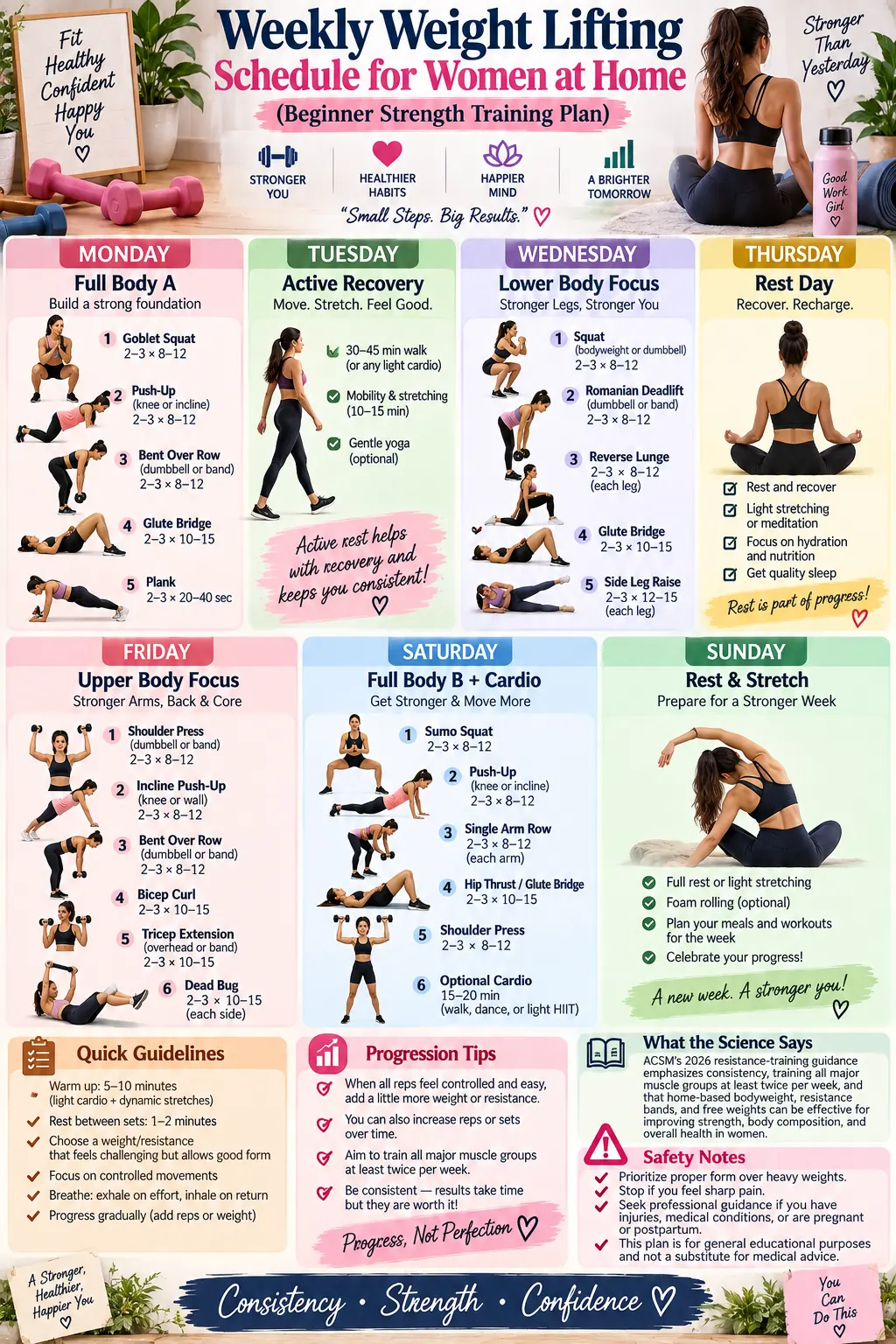
Weekly Weight Lifting Schedule for Women at Home (Beginner Strength Training Plan)
A useful beginner strength plan does not need a commercial gym. With dumbbells, resistance bands, or even bodyweight variations, you can train the major movement patterns at home while keeping recovery days built into the week.
Quick Takeaways
- Train the major muscle groups across two or more strength sessions each week.
- Use a weight or resistance level that challenges you while allowing controlled technique.
- Rest and active recovery are part of the plan, not wasted days.
- Progress gradually by adding reps, resistance, sets, or better control over time.
Monday: Full Body A
Start the week with goblet squats, push-ups, bent-over rows, glute bridges, and a plank. Aim for roughly 2–3 sets per exercise, with a rep range that lets you maintain good form; the infographic uses 8–12 reps for several movements and timed planks.
If you are new, use bodyweight or a light resistance level. The goal is to learn the movement pattern before chasing heavier numbers.
Tuesday: Active Recovery
A 30–45 minute walk, easy cycling, gentle yoga, or mobility work can keep you moving without adding another hard lifting session. Use this day to improve comfort and recover from Monday's work.
Recovery is also about sleep, hydration, and food. If you are unusually sore or fatigued, keep the session easier rather than forcing intensity.
Wednesday: Lower Body Focus
Use squats, Romanian deadlifts, reverse lunges, glute bridges, and side leg raises to emphasize the hips and legs. Start with 2–3 sets and choose a resistance that allows controlled reps.
For unilateral exercises, train both sides. If balance is difficult, use a wall or sturdy support until the movement becomes more comfortable.
Thursday: Rest and Recharge
Take a genuine rest day. Light stretching or an easy walk is fine if it feels good, but you do not need to turn every day into a workout.
Use the day to prepare meals, plan the next sessions, and get enough sleep. Consistency is easier when your weekly plan leaves room for recovery.
Friday: Upper Body Focus
Shoulder presses, incline or wall push-ups, bent-over rows, biceps curls, triceps extensions, and dead bugs create a simple upper-body and core session. Use 2–3 sets and stop a set when technique starts to break down.
You can substitute resistance bands for dumbbells and adjust the angle of push-ups to make them easier or harder.
Saturday and Sunday: Full Body + Recovery
Saturday can combine a second full-body session with optional 15–20 minutes of light cardio. Sunday is a rest and stretch day. This gives the week two or three meaningful strength exposures without requiring hard training every day.
The exact schedule can be moved around your life. If work or school makes Wednesday impossible, shift the sessions while keeping recovery between demanding workouts.
How to Progress Without Overdoing It
When your current weight feels controlled across all planned reps, add a small amount of resistance or a few repetitions. Another option is to improve range of motion or tempo while keeping the same load.
Avoid increasing everything at once. One small progression at a time makes it easier to see what your body tolerates and keeps technique at the center of the program.
Frequently Asked Questions
How many days a week should a beginner woman lift weights?
Two to three well-structured strength sessions can be a practical starting point, with recovery days between harder sessions.
Can I build strength at home?
Yes. Dumbbells, resistance bands, and bodyweight exercises can all provide effective resistance training.
Do women need to lift heavy weights?
Not necessarily. Strength can improve with appropriately challenging resistance, and beginners can start with manageable loads.
How many sets should beginners do?
Two to three sets per exercise is a common starting range, with the exact amount depending on the exercise and training experience.
How many reps should I do?
The infographic uses mostly 8–12 reps, with some movements using 10–15 reps or timed holds. Choose a range that allows good technique.
Should I work out every day?
You can move every day, but you do not need hard strength training every day. Recovery days are useful.
What equipment do I need?
A pair of dumbbells and a resistance band are enough for many home routines, and many movements can also be done with bodyweight.
What should I do on rest days?
Rest, walk lightly, stretch, sleep well, and focus on hydration and normal balanced meals.
How do I know when to increase weight?
When your planned repetitions feel controlled and you could comfortably perform more, consider a small increase in resistance.
Can beginners do Romanian deadlifts?
Yes, but learn the hip-hinge pattern first and use light resistance until the movement feels controlled.
Can I replace dumbbells with bands?
Yes. Bands can provide resistance for rows, presses, curls, extensions, and several lower-body exercises.
How long should a home strength workout last?
Many beginner sessions can fit into about 30–60 minutes depending on warm-up, rest, and exercise selection.
Is cardio necessary with strength training?
Cardio is useful for general health, but the amount depends on your goals and overall activity. The plan includes optional light cardio.
What if I feel pain while exercising?
Stop the movement if you feel sharp or unusual pain. Persistent or concerning pain should be assessed by an appropriate healthcare professional.
Can I follow this plan during pregnancy or after childbirth?
Training needs can change significantly during pregnancy and postpartum. Get individualized guidance from a qualified healthcare professional before following a program.
Final Takeaway
A useful beginner strength plan does not need a commercial gym. With dumbbells, resistance bands, or even bodyweight variations, you can train the major movement patterns at home while keeping recovery days built into the week. Save this guide to revisit when you are planning your next meal, routine, gift, or style update.
More Ideas You May Like

Best Birthday Gifts for Best Friend That They'll Absolutely Love (2026 Gift Guide)
Looking for birthday gifts for your best friend? Explore 25 thoughtful, cute, personalized, practical, and memorable ideas for every personality and budget.

Korean Skincare Products for Oily Skin: 10 Must-Have Picks for Clear, Shine-Free Skin
Explore 10 Korean skincare product types for oily skin, plus a simple AM and PM routine, ingredient tips, common mistakes, and ways to avoid over-drying your skin.
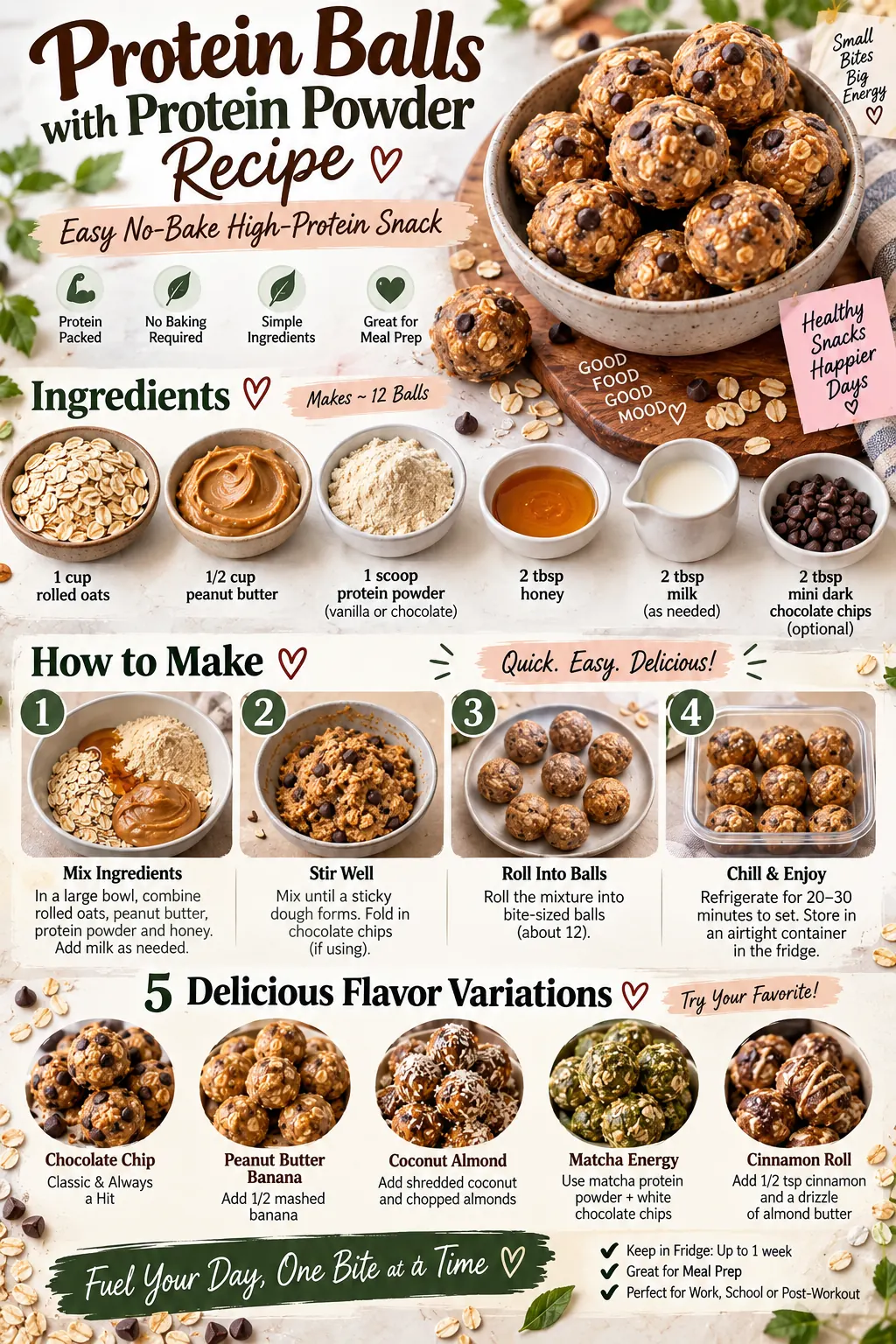
Protein Balls with Protein Powder Recipe: Easy No-Bake High-Protein Snack
Make easy no-bake protein balls with protein powder, oats, peanut butter, honey, and optional chocolate chips. Includes flavor variations and storage tips.